Chianti Day Trip from Florence with the Family
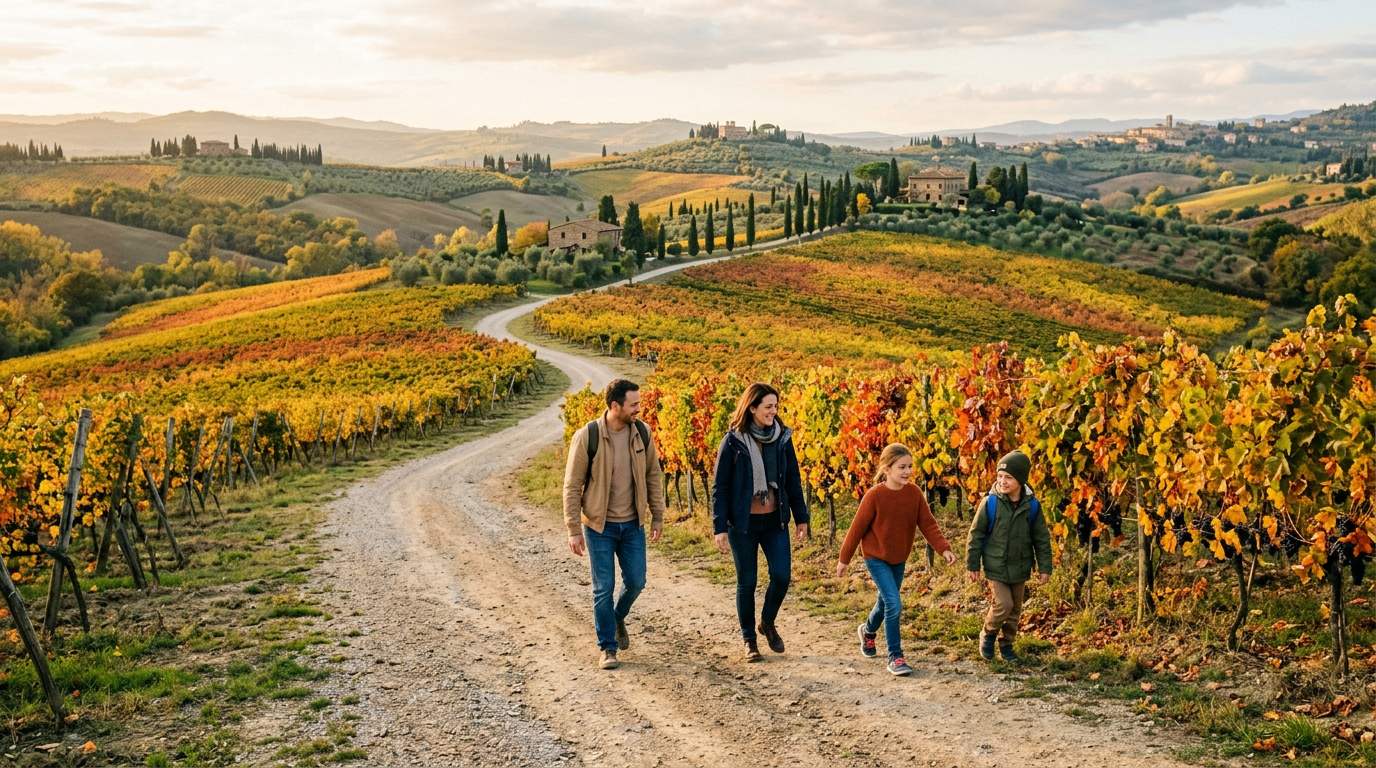
South of Florence, the city traffic drops away and within twenty minutes you are on a road that winds through vineyards and cypress lines and steep wooded ridges with views that cost nothing and are available all year. The Chianti region begins at the edge of the city and extends south toward Siena, and for families based in Florence it represents the most accessible piece of genuine Tuscan countryside - no motorway junction, no bus transfer, just the Chiantigiana road and wherever you choose to stop along it.
Planning the Drive South
The SS222, known informally as the Chiantigiana, runs south from Florence through the towns of Greve, Panzano, Radda, and Castellina before descending toward Siena. This is the natural axis of a Chianti day trip, and you can do as much or as little of it as the children’s energy and the temperature allow.
The Chianti is overwhelmingly a car destination. Public buses serve some of the main villages, but services are infrequent and timetables are not designed for day visitors. Renting a car, if you have not brought one, is the practical solution. Drive south out of Florence on the Viale Michelangiolo and pick up the Chiantigiana at Ponte a Ema.
Greve in Chianti is 28 km from central Florence and takes around 40 minutes without stops. It has a triangular central piazza where parking is available, and the town functions as the natural first stop. Panzano is 11 km further south. Radda in Chianti is a further 16 km and sits at about 530 metres altitude - noticeably cooler than Greve in August. Castellina in Chianti is 40 km from Florence and is the last main town before the landscape opens toward Siena.
Leave Florence before 9:00 in summer. August temperatures on the valley floor can reach 34 or 35 degrees by midday. The higher villages stay cooler.
What Children Get From the Day
The appeal for children is different from what draws adults. They respond to open space after several days of city streets, to the scale of the landscape, to farm animals glimpsed through fences, to the freedom of running in a vineyard without needing to be quiet around other tourists.
Castellina’s most interesting feature for children is the Via delle Volte, an underground medieval passageway that runs beneath the main street. It was used as a defensive corridor during conflicts between Florence and Siena in the 13th and 14th centuries. The low arched ceiling, cool air, and dim light make it feel like something from a novel. Children aged 6 and upwards find it genuinely absorbing. The walk through takes about 10 minutes.
Several farms along the Chiantigiana are fattorie didattiche - educational farms that have adapted specifically for family visits and allow children to observe or interact with animals. Look for signs as you drive. Donkeys, rabbits, chickens, and geese are common. No booking is usually required for a short stop.
Short countryside walks are possible from most of the main villages. The paths around Radda into the surrounding woodland are well-trodden and suitable for children aged 5 and upwards. A one-hour circular walk brings you back to the village in good time for lunch.
Wineries That Welcome Families
Not all wineries are set up for visits with children, but several in the Chianti have thought carefully about the experience for families.
Castello di Verrazzano, a short distance north of Greve, offers guided walks of the estate that take in the olive groves, the kitchen garden, and the woodland, alongside a tasting for adults. The property is large enough that children can explore safely while the adults are occupied with wine.
Badia a Coltibuono, near Gaiole in Chianti, is set within a restored Benedictine abbey and has extensive gardens and grounds. The estate restaurant serves lunch in a setting that is memorable for adults and interesting enough for older children. The cooking school is more suitable for adult visits. Open April to October; reservations essential.
Ring ahead before any winery visit, even when the website suggests walk-ins are welcome. In August, organised tour groups frequently block available slots. A telephone call the evening before avoids the disappointment of a closed gate.
Lunch in the Chianti
Greve in Chianti has several good trattorias within easy range of the central piazza. A full lunch for two adults and two children - two courses, water, and a glass of local Chianti for the adults - costs between 35 and 50 euros depending on what you choose.
Panzano is where you find Dario Cecchini’s butcher shop and its associated lunch service, one of the most theatrical and celebrated food experiences in all of Tuscany. Communal tables, theatrical atmosphere, and food built around exceptional Chianina beef. Reservations are required and should be made at least a week in advance in summer. This works well for older children; very young children may find the atmosphere overwhelming.
Packing a picnic is a genuinely good option that children often enjoy more than a restaurant. Buy cheese, bread, local cold cuts, and olive oil from one of the farm shops or delis in Greve. Many farms have wooden tables on their property available for guests. Eating in the shade of a vineyard is a memory that outlasts most restaurant meals.
Making the Most of the Day
Return to Florence no later than 18:00 to avoid the evening traffic on the Chiantigiana, which can build on summer weekends. Bring sun protection, hats, and enough water for the day - the higher villages have small bars but no reliable shops for large supplies. Pack a light layer for stops at Radda or Castellina, where the altitude drops the temperature noticeably.
Staying at Charlotte at Via Guido Monaco 19, five minutes from Santa Maria Novella, means an early start is effortless. The team can give you current advice on road conditions, the best picnic stops, and which farms along the route are open to families.