San Lorenzo in Florence with Your Family
The neighbourhood you will walk through every day
San Lorenzo is the residential quarter wrapped around one of the oldest churches in Florence, about four hundred metres north of the Duomo. If you are staying near Santa Maria Novella - as you are if you are at Charlotte on Via Guido Monaco 19 - you will almost certainly pass through San Lorenzo repeatedly during your stay: on the way to the market, to the Medici chapels, to the side streets leading toward the Accademia. It makes sense to understand it properly rather than treating it as a thoroughfare.
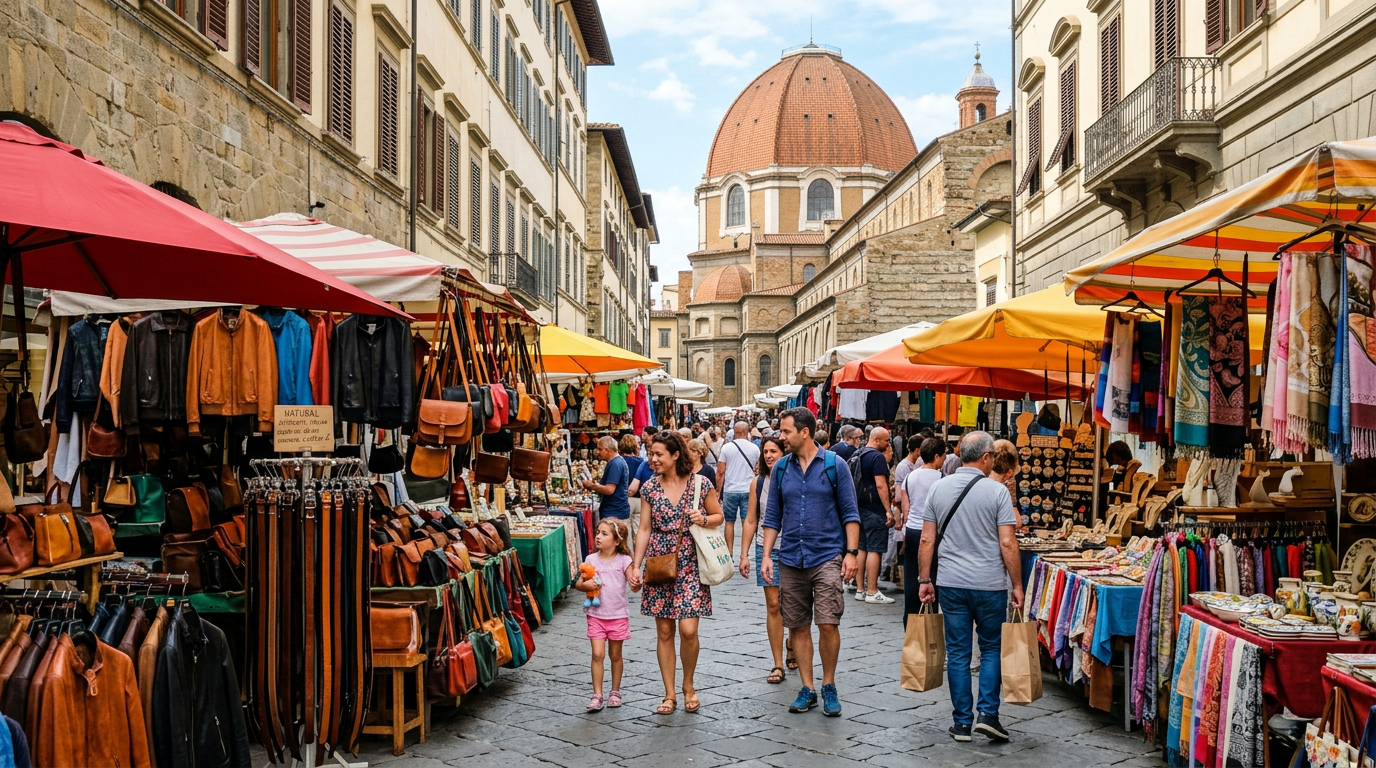
The neighbourhood runs at two speeds, which is one of the things I genuinely like about it. During the day it is noisy, bright, and full of movement: the outdoor market fills the streets around Piazza San Lorenzo, vendors call out from leather stalls, families with pushchairs weave between tourists and guided groups. By seven in the evening it becomes almost quiet. Restaurants fill up, market stalls pack away, and the neighbourhood settles into something that feels more like where Florentines actually live. Coming back in the early evening when the basilica is lit and nearly empty of tourists is a completely different experience from the daytime bustle.
The Mercato Centrale and the outdoor stalls: two very different things
The San Lorenzo market is actually made up of two distinct entities that are often confused.
The Mercato Centrale is the covered iron and glass building on Via dell’Ariento, built in 1874. The ground floor is a working food market - stalls selling fresh meat, fish, local cheeses, vegetables, bread, and dried goods. It is not a tourist food hall; it is where Florentines actually buy their food, and the prices reflect that. It opens Monday to Saturday from seven in the morning until two in the afternoon. If you want to assemble a picnic lunch or pick up something for the room, this is one of the best places in the city to do it.
The upper floor of the Mercato Centrale is a food court with individual cooking stations, each one focused on a different thing: fresh pasta, lampredotto sandwiches, pizza, Chianina beef burgers, Florentine wines, craft beer, and gelato. It is open every day until midnight. For families with children who disagree on what to eat - which is to say, most families - it works well precisely because nobody has to compromise. Prices per dish run between eight and fifteen euros. It is more expensive than a trattoria but significantly more flexible.
The open-air market spreads across several blocks around Piazza San Lorenzo itself. This is the part that takes up the pavements and creates the sense of organised chaos. Stalls sell leather bags, wallets, belts, scarves, T-shirts, souvenirs, and everything in between. Quality varies sharply. Genuinely good leather goods exist alongside factory-made imports. The general guide is that if a leather wallet is priced at six euros, it is not leather. A well-made leather item from an honest stallholder runs from about twenty-five euros. Before taking children into the market, agree on a single item and a budget. It prevents lengthy negotiations and impulse purchases that everyone regrets.
The Medici’s neighbourhood: what to visit with children
Basilica di San Lorenzo is the Medici family church and one of the great Renaissance interiors in the city. Brunelleschi designed the rebuilt structure for Cosimo de’ Medici in the early fifteenth century. The interior is calm, geometric, and austere - white walls, grey pietra serena stone columns, perfect proportions. It is considerably easier to grasp than the Duomo for children, because the scale is human and the decoration is restrained rather than overwhelming. Children between seven and twelve who are given some context about the Medici family before entering tend to engage with it properly. Ticket is around seven euros.
Cappelle Medicee - the Medici Chapels - are entered through a separate door in Piazza Madonna degli Aldobrandini, behind the basilica. Inside are Michelangelo’s most powerful sculptures: Night, Day, Dawn, and Dusk, reclining on the tombs of Giuliano and Lorenzo de’ Medici. For children between ten and fourteen these figures are arresting - physically enormous, psychologically complex, unlike anything else. A short conversation beforehand about what it would feel like to be turned into a sculpture representing Time tends to open the visit up. Ticket around nine euros.
Biblioteca Medicea Laurenziana is the library Michelangelo designed inside the cloister of San Lorenzo. Admission is low or free depending on the current arrangement. The staircase in the entrance vestibule - wide at the base, narrowing dramatically as it rises, with convex steps that behave like no other staircase in the world - is one of the strangest architectural objects of the Renaissance and worth five minutes of anyone’s attention.
Palazzo Medici Riccardi on Via Cavour is five minutes on foot from the market. Inside, the Cappella dei Magi contains Benozzo Gozzoli’s 1459 fresco cycle in which the Medici family are painted as the Three Kings and their retinue, dressed in magnificent procession clothes and riding through an invented Tuscan landscape. Spotting the family members hidden among the procession figures is a genuinely absorbing exercise for children. Ticket around seven euros.
Eating well without leaving the neighbourhood
Trattoria Mario on Via Rosina 2 is an institution. Open for lunch only, Monday to Saturday. Long shared tables, a blackboard menu, a turnover pace that means you rarely wait long once you are seated. The cooking is classic Florentine: ribollita, pasta e fagioli, braised meats, roast chicken. A full meal including house wine for two adults costs about twenty-five to thirty euros. Plain pasta with olive oil is available for children even if it is not on the board - no one minds. Arrive before twelve-thirty or join the queue outside.
Nerbone, on the ground floor of the Mercato Centrale near the central entrance, has been serving lampredotto and bollito since 1872. A lampredotto sandwich - Florence’s signature street food, made from the fourth stomach of a Florentine cow, slow-cooked and served in a bread roll with salsa verde or hot chilli - costs about four euros fifty. I will not promise your children will love it, but curious children aged eight and above who have been briefed on what it is tend to try it willingly, and sometimes enthusiastically. It is genuinely authentic and genuinely inexpensive.
The Mercato Centrale upper floor remains the most flexible option for families who cannot agree. Wide choice, informal atmosphere, no fixed menu. Mid-range prices per person, open every day including weekends until late.
Getting around the neighbourhood with children
The pavement in front of the open-air market is navigable with a pushchair, but it requires some weaving between stalls and pedestrians. Via dell’Ariento, which leads to the Mercato Centrale entrance, is wider and more manageable. The streets around the basilica and the chapels are generally low-traffic during the day.
Pickpockets operate in the San Lorenzo market area, as they do in any crowded tourist zone. Keep bags in front of you and documents in an inside pocket. With children it is also worth establishing a meeting point before you enter the busy market streets - the Mercato Centrale’s distinctive glass and iron facade is easy to recognise and makes a reliable rendezvous.
Charlotte is a ten-minute walk from the heart of San Lorenzo, which means you can dip in and out throughout your stay without committing an entire day. Browse the market in the morning, visit the basilica after lunch, come back for dinner from the Mercato Centrale upper floor. The neighbourhood rewards repeated visits. Find everything you need to plan your stay at Charlotte.