Museo dei Ragazzi Florence: Family Guide
Most children tolerate history museums. A small number actively enjoy them. The Museo dei Ragazzi at Palazzo Vecchio in Florence is the exception: it is the programme that parents consistently describe as the highlight of their whole trip to Florence, including the adults.
The reason is simple. Instead of asking children to look at things, it asks them to do things - inside a genuine fourteenth-century building that was once the political heart of the Medici city. The distinction matters more than it sounds.
What Makes This Different from a Regular Museum Visit
Palazzo Vecchio is the medieval town hall on Piazza della Signoria, the main square of Florence. Its towers and crenellated roofline have dominated the city’s skyline for seven centuries. It is a functioning civic building - the mayor of Florence still works here - and the interior is full of rooms that were genuinely used by the Medici family, their secretaries, their court painters, and the councils that ran the Renaissance republic.
The Museo dei Ragazzi is not a separate wing. There is no “children’s section” with lowered display cases and simplified labels. Instead, the programme takes place inside the actual historic rooms - the same frescoed chambers and private apartments that adult visitors walk through. The difference is the narrative layer placed over those rooms.
Children who book the programme are given roles: household members, investigators, apprentices. A costumed guide introduces the story in the courtyard, and from there the group moves through the palace as participants rather than observers. They pass through the Salone dei Cinquecento, the vast assembly hall painted with enormous battle scenes by Vasari. They see the studiolo of Francesco I, one of the most extraordinarily decorated small rooms in all of Florence - a windowless private study covered floor to ceiling in paintings and inlaid wood, where a sixteenth-century prince kept his personal collection of curiosities. They enter the Medici private apartments. They are, throughout all of this, actively engaged in a story.
This approach works across a wider age range than most educational programmes manage. A seven-year-old and a twelve-year-old can be in the same group and both be genuinely absorbed.
The Specific Programmes Available
Two main narrative programmes run for individual family bookings in 2026:
The Secret of the Duke (Il Segreto del Duca) is aimed at children aged five to ten. It lasts approximately seventy-five minutes and is available in both English and Italian. The narrative involves a mystery set in the Medici court that children must help to solve by observing the rooms carefully and following clues. Young children who enjoy games of discovery respond particularly well.
Cloaks and Daggers (Cappa e Spada) is designed for children between nine and fourteen. The same duration, the same language options, but the themes are more complex - political intrigue, Renaissance power, the tension between loyalty and ambition. Children this age who engage with stories that do not talk down to them find this genuinely gripping.
Special programmes run during the Christmas period, Easter week, and the summer months. These use different room routes and seasonal themes. The summer version is often more adventurous in its use of the building because visitor flow is more manageable during weekday morning hours.
Workshops That Stand Alone
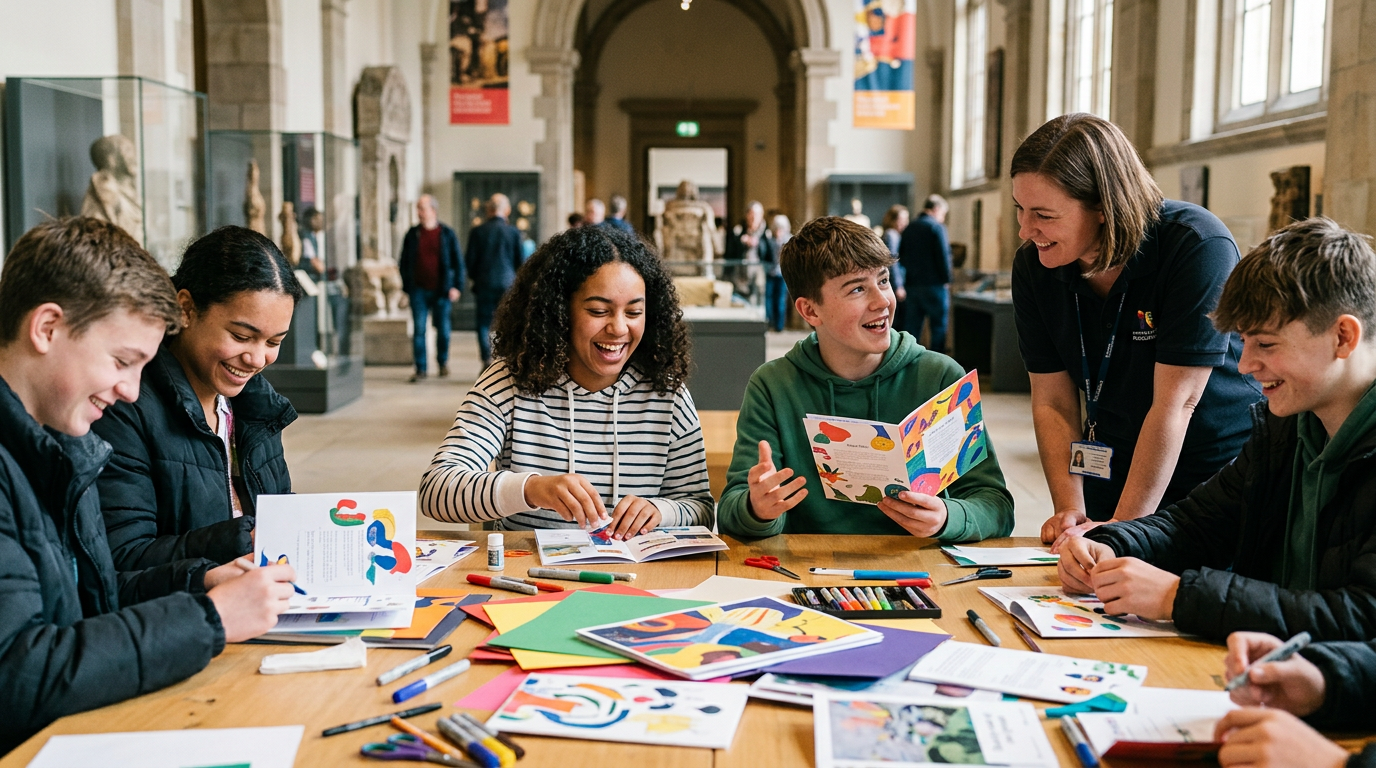
Separate from the narrative visits, the Museo dei Ragazzi runs a series of standalone creative workshops that can be booked on their own or in combination with the palace visit.
The current 2026 workshop menu includes:
Renaissance calligraphy and illuminated lettering (from age seven): children learn to use quill pens and work with the script forms used in fifteenth-century Florentine documents. The results - an illuminated initial letter, a short phrase in period hand - are genuinely impressive and make excellent keepsakes.
Fresco technique (from age nine): this is the painting method used by Masaccio, Ghirlandaio, and Michelangelo. Children prepare a small plaster tablet and paint onto the wet surface with pigments, learning why the technique requires speed and why errors cannot be corrected.
Heraldic design (from age eight): the visual language of Renaissance coats of arms is both intricate and learnable. Children design their own heraldic shield using authentic conventions, then produce a finished version in gouache.
Workshop sessions last sixty to seventy-five minutes and take place in dedicated rooms that are separate from the main tourist route. Prices in 2026 are approximately 8 to 10 euros per child per workshop. A combined ticket covering the narrative visit plus a workshop costs around 14 euros per child. Adults accompanying children pay the standard palace entry fee (approximately 12.50 euros) plus a small participation fee for the workshop of around 4 to 5 euros.
Summer Camps at Palazzo Vecchio
Families spending more than a few days in Florence - or living in the city temporarily - should know about the summer morning programme that runs from June through August.
The week-long camp format combines a daily palace room visit with a daily hands-on workshop. Children spend each morning at Palazzo Vecchio, cycling through different rooms and different craft activities across five days. The programme runs Monday to Friday from 09:00 to 13:00. The fee for 2026 is approximately 120 to 150 euros per child for the full week.
This is unusually good value for an immersive cultural programme in a major European city. It is popular with children of the Florentine expat community and also with families on extended visits. Booking for the summer weeks opens in spring and fills quickly, particularly for English-language places.
Practical Details for Visitors
Getting there: Palazzo Vecchio sits on Piazza della Signoria, the large square in the historic centre. From Santa Maria Novella station it is about a ten-minute walk through the pedestrianised shopping streets. Multiple bus lines stop within two minutes’ walk.
Opening hours: the palace is open daily. Standard hours in 2026 are 09:00 to 19:00 from Friday through Wednesday, and 09:00 to 14:00 on Thursdays. Holiday hours differ slightly; check the official website before going.
When Museo dei Ragazzi programmes run: most narrative visits take place between 09:30 and 12:30. Afternoon slots exist but are fewer and fill faster. Weekend slots sell out more quickly than weekday slots - if you have a choice, mid-week mornings give you the most booking flexibility.
Booking process: book through the official Comune di Firenze museum booking system on the Palazzo Vecchio website. English-language visits have fewer slots than Italian ones, and in the spring and summer season they can fill two to three weeks in advance. Do not assume you can book on the day during April, May, June, or July. Phone booking is also possible through the education office; the staff there generally manage in English.
Toilets: available inside the palace near the main entrance. A cafe operates in the courtyard during the main season.
Children under five: toddlers are welcome to accompany older siblings, and most guides accommodate a three or four-year-old very graciously. But the narrative programmes are genuinely designed for children old enough to follow a story - the minimum age for meaningful independent participation is around five.
Families at Charlotte regularly walk to Palazzo Vecchio in the morning, spend a session at the Museo dei Ragazzi, and return to the guesthouse for lunch before heading out again in the afternoon - it is exactly the kind of morning that works best from a central base.