Maremma Day Trip from Florence with the Family
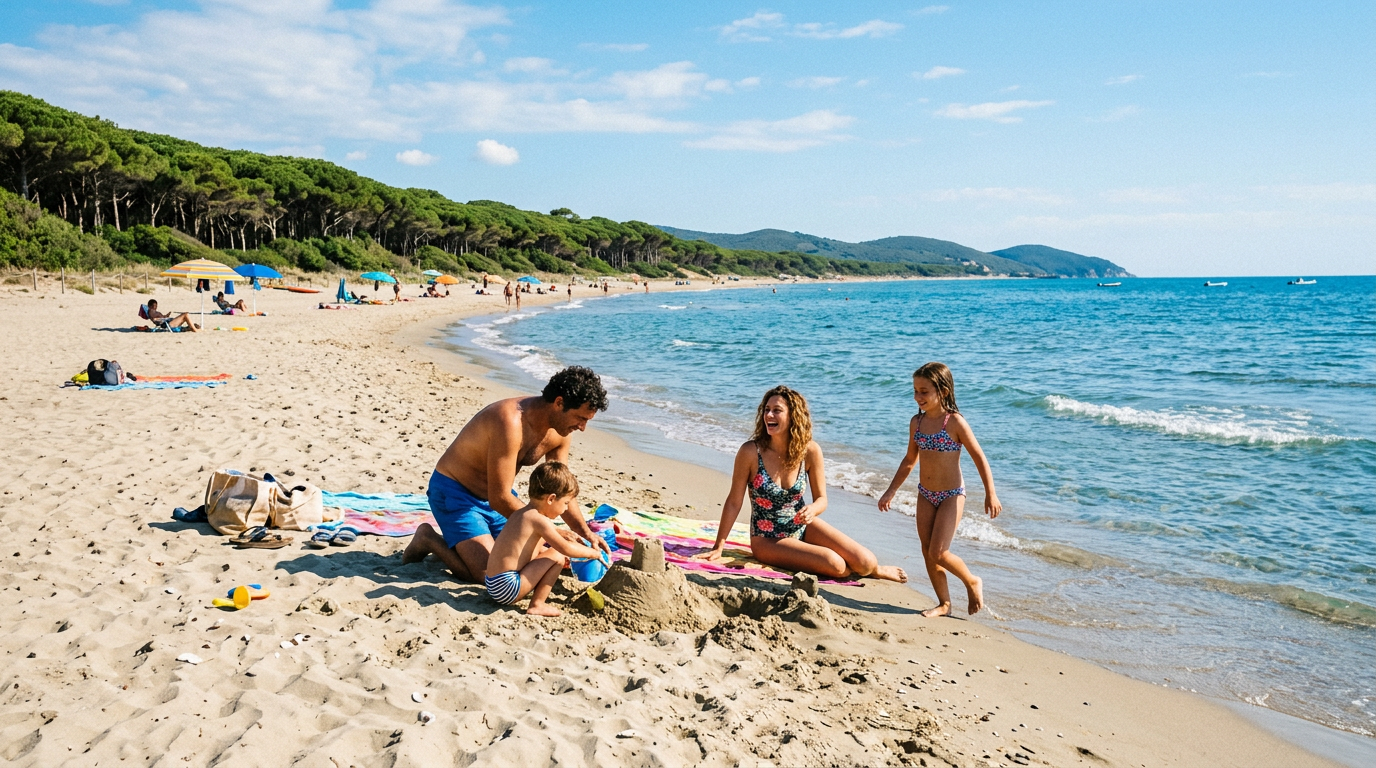
Most families spending a week in Florence do not realise that in under two hours they could be on one of the wildest stretches of coastline in central Italy, with sand between their toes and the smell of pine resin in the air. The Maremma does not advertise itself loudly, which is precisely what makes it worth the drive.
Unlike the organised lido beaches of Versilia near Viareggio, which are pleasant enough but essentially identical to each other, the Maremma coast has a genuinely different character. Pine forests come down close to the waterline. Some beaches have no facilities at all. The water is clean, the colour shifts from pale green in the shallows to deep blue further out, and on a good September morning the light makes everything look slightly unreal.
The Distance from Florence and Which Way to Go
The Maremma coast runs roughly from Follonica in the north to Capalbio in the south - a strip of around a hundred kilometres. For a family day trip from Florence, the most practical section is the central and northern part: Castiglione della Pescaia, Marina di Grosseto, and the Maremma Natural Park near Alberese.
Castiglione della Pescaia is approximately 160 km from Florence. Via the E78 dual carriageway and the SS1 coastal road, expect to drive for around one hour and forty-five minutes in normal conditions. Leave Florence from Via Guido Monaco before 7:30 and you will arrive at the beach before 9:30, well ahead of the crowds.
Marina di Grosseto is slightly closer at around 155 km from Florence, with a similar drive time.
Alberese, where you enter the Maremma Natural Park, is about 170 km from the city and takes roughly two hours. The road goes through Siena province and into the Grosseto plain - agreeable driving through Tuscan farmland.
Follonica, the northernmost beach town, is only 130 km from Florence and can be reached in just under ninety minutes. It is a good option if you want maximum beach time with minimum travel.
By public transport, this trip is significantly harder to manage with children. Trains run from Santa Maria Novella to Grosseto in around ninety minutes (roughly 15 euros per adult return), but reaching the beach or park from Grosseto station requires a taxi or a local bus service with limited frequency. A hire car for the day, available from rental points near the station, costs approximately 40 to 60 euros and gives you the flexibility to move between spots.
The Best Beaches for Children
Le Rocchette is the beach to go to if you have children under six and want calm, shallow water in a protected cove. It sits just south of Castiglione della Pescaia, and the seabed shelves very gently out from the shore - children can wade twenty metres without the water reaching their waists. The downside: it fills up fast in summer. In August, the car park is full by 9:00. Come in June or September for a different experience entirely.
Marina di Grosseto has a longer, wider beach with sections of both paid lido and free access. A lido umbrella and two sunbeds cost around 15 to 20 euros per family per day. The free sections are perfectly good with your own equipment. This is a more typical Italian beach town than Castiglione - fuller, louder, with more stalls and beach bars - and some families prefer that energy.
Cala Violina, tucked into a nature reserve south of Follonica, is the kind of beach that appears on screensavers. The sand is unusually fine and white; the water is turquoise and sheltered. The catch: from June to September, access by private car is cut off at 11:00. Arrive before then and you can park 1.5 km away and walk through pine forest to reach the beach. After 11:00 you park at the reserve entrance and walk the same path. Entry to the reserve costs 3 euros per person. Bring everything you need - there are very few facilities.
Punta Ala, north of Castiglione, has a sailing marina and some of the most expensive real estate on the Tuscan coast, but also a series of excellent beaches on its southern side. Less busy than Castiglione, better maintained than some of the free beaches, and with a handful of decent beach bars for lunch.
The Maremma Natural Park: Wildlife, Trails, and What to Expect
The Parco Naturale della Maremma - sometimes called the Uccellina - covers around ten thousand hectares stretching from the Ombrone river mouth south to Talamone. It is one of the most ecologically intact coastal landscapes remaining in central Italy: Mediterranean scrub, cork oak forest, wetlands, ancient watchtowers, and a long stretch of protected beach.
No private vehicles enter beyond the visitor centre at Alberese. Shuttle buses run from the car park at Alberese to the trailheads from May to September, departing roughly every thirty minutes. The entry fee in 2026 is 10 euros for adults and 5 euros for children aged 6 to 14; under-sixes are free. The shuttle is included.
For families, the most suitable trail is the A1 route, called Dune e Pineta. It is nine kilometres long, runs through coastal pine forest, and ends at the beach where you can swim before catching the shuttle back. Allow three to four hours and bring plenty of water. The terrain is flat and suitable for children aged eight and above; younger children will find nine kilometres long.
The shorter C1 trail (Le Torri) is four kilometres and visits two medieval lookout towers built to spot Saracen raids. It is manageable for children aged six and above and takes around two hours. This is a better choice for families with a mixed age range.
Wildlife sightings are common in the park, particularly on morning visits. Maremma horses (the native semi-wild breed) roam the northern section. Wild boar, roe deer, and heron are reliably present. Golden eagles and ospreys have been recorded. Binoculars are worth bringing for children who enjoy spotting animals - it adds a genuine purpose to the walk.
Planning the Day Sensibly
A Maremma day trip works best when you commit to one main activity - either the beach or the park - rather than trying to do both. The distances between them, combined with the heat of a Tuscan summer afternoon, make the combined approach exhausting.
Leave Florence by 7:30 at the latest. You want to arrive before the heat and before the car parks fill.
Spend the morning at the beach or on a park trail. The period from 8:30 to 12:30 is the best time: comfortable temperature, good light, and you beat the majority of day-trippers who tend to arrive from 10:00 onwards.
Break for lunch from around 12:00 to 14:30. Eating at a beach bar is the easy option - a simple lunch for two adults and two children (pasta, grilled fish, soft drinks) will cost around 40 to 55 euros. If you have driven to the park area near Alberese, the village of Alberese itself has a small bar and restaurant near the visitor centre.
The afternoon from 14:30 to 17:00 is the hottest part of the day. If you’re at the beach, either stay in the water or retreat to the shade for a rest. If you’re in the park, plan to have finished the trail before this window.
Aim to leave for Florence by 17:30 at the latest. Traffic around Grosseto and on the Siena road can be heavy on summer evenings. Getting back on the road early saves significant time.
Pack sun cream, a beach parasol or UV tent if you have babies or toddlers, plenty of water, snacks, and a change of dry clothes for each child. The Maremma coast in summer regularly reaches 35 degrees Celsius, and children who have spent the morning in sea water get cold quickly in air conditioning.
Families staying at Charlotte regularly ask about the Maremma as a day trip option. It is one of the best excursions you can make from Florence with children - just plan the logistics the evening before and get an early night, because a 7:00 departure requires everyone to be genuinely awake.