Children's Ceramics Workshops in Florence
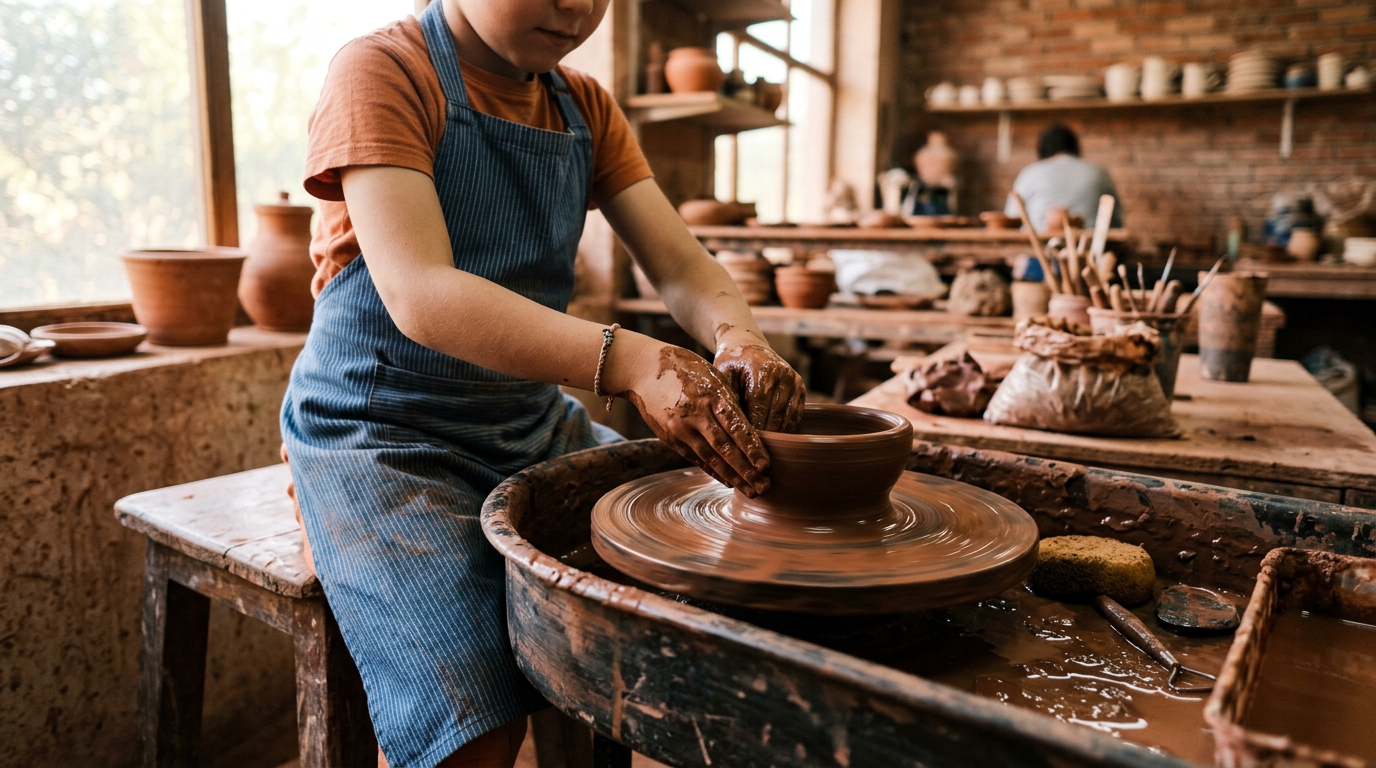
My daughter got clay under her fingernails at a pottery studio in the Oltrarno when she was six years old, and it took three washes to get it out. She still talks about that afternoon. That is what a ceramics workshop in Florence can do: it leaves a proper impression, the tactile kind that no museum audio guide can replicate.
Tuscany has fired clay for thousands of years. The della Robbia family turned glazed terracotta into an art form in the fifteenth century - their blue-and-white roundels still decorate buildings all over Florence. That tradition has never entirely disappeared. Potters still work behind heavy wooden doors in the Oltrarno, and several of them now welcome families with young children for hands-on sessions.
Finding the Right Studio in the Oltrarno
The neighbourhood to head for is the Oltrarno, on the south bank of the Arno. This is where the city’s working craftspeople have congregated for generations, and it remains the best hunting ground for authentic ceramics experiences. Via Maggio, Via de’ Serragli, and the lanes running between them have the highest concentration of active studios.
Studio Zafferano, tucked just off Via dei Serragli, is one of the most family-friendly options in the city. The ceramicist who runs it is a native English speaker, which removes any language anxiety for non-Italian visitors. Weekend morning sessions (Saturday and Sunday, 10:00 to 12:00) are dedicated to families. Children aged five and above are welcome; the price is around 35 euros per child and 30 euros per accompanying adult. Everything needed - clay, tools, aprons, firing - is included. Finished pieces are fired during the following week and can either be collected or posted home.
Studio Arte dei Colori, near Via Sant’Agostino, runs sessions that introduce children to hand-painting on pre-fired bisque ware using traditional Florentine motifs. This is a good choice for slightly younger children or for any child who finds working with raw clay stressful, as the bisque pieces already have a stable form. Sessions of approximately two hours cost between 30 and 35 euros per child, including all materials and firing.
La Ceramica Fiorentina, closer to the Ponte Vecchio end of the Oltrarno, focuses specifically on the majolica technique - the painted, tin-glazed earthenware that Florence has produced since the Renaissance. Children choose a small white bisque piece (typically a bowl, a tile, or a simple plate) and paint it using period-inspired pigments. A 90-minute session costs around 25 euros per child. No previous experience is necessary, and the results are genuinely impressive even from very young painters.
What Happens During a Session
Arrive at a Florence ceramics studio with children and you will typically follow a structure that most workshops share, regardless of which technique is the focus.
The first quarter-hour is orientation. Children handle a piece of raw clay and learn its basic rules: it cracks if it dries unevenly, it must stay covered when you’re not working it, and pressure should be consistent. This is not a formal lecture - most instructors demonstrate by showing rather than explaining.
For children aged four to seven, the work is almost always hand-building. Pinch pots, pressed handprint tiles, and simple coil rings are the most common projects. These require grip and intent rather than precision, and a child who can build a sandcastle can absolutely manage a pinch pot. Sessions for this age group work best when kept to sixty or seventy-five minutes.
Children between eight and eleven can take on coil-building more seriously. Rolling even coils and stacking them methodically to form a cylinder or a squat vessel takes concentration and produces something genuinely pot-shaped at the end. Instructors help with smoothing joins and keeping walls even.
From twelve upwards, wheel access becomes a realistic option in longer sessions. Being honest: first attempts on the wheel produce something that looks more like an abstract landform than a pot. But the feeling of centred clay spinning under wet hands is the kind of physical experience that sticks. Not every Florence studio includes wheel time in standard sessions - ask when you book if it matters to you.
After forming comes decorating. Depending on the studio, options include scratching patterns into the surface with wooden tools, pressing in textured objects, painting with coloured liquid clay, or - in the majolica workshops - applying oxide pigments to pre-fired surfaces.
Once decorated, pieces need to air-dry thoroughly before going into the kiln. Most Florence studios complete firing within three to five days. The finished pieces can be wrapped and collected or sent by post; international shipping to the UK typically adds ten to twenty euros.
Age-by-Age Guidance
The honest minimum age for most Florence ceramics workshops is four years old. Below that, the clay tends to become more of a sensory toy than a material to shape, which is fine at home but can disrupt a studio session.
Ages four to six: keep it simple and keep it short. Handprint tiles and basic pinch pots work well. Choose sessions of no more than seventy-five minutes. Sit with your child throughout - not to hover, but to keep the attention anchored. The studio staff will often suggest the most achievable project for a given child’s age and disposition.
Ages seven to ten: this is the sweet spot for ceramics workshops. Children at this stage have the patience for a ninety-minute session, the dexterity for more complex hand-building, and enough sense of achievement to feel genuinely proud of a finished piece. They can also receive feedback from an instructor and act on it.
Ages eleven to fourteen: longer sessions become viable and wheel time is worth requesting. Children this age often become genuinely absorbed in the technical challenge of the wheel or in detailed surface decoration. Some studios that primarily run adult classes will accept teenagers alongside adults for regular sessions.
Above fifteen: teenage children and adults share the same workshop experience at most Florence studios. A two-hour session with full wheel access is appropriate.
Pricing and Practicalities
Workshop prices at Florence ceramics studios in 2026 fall into two broad brackets. Majolica-style painting sessions on pre-fired bisque pieces tend to be the less expensive option, ranging from around 15 euros for a single small piece up to 30 euros for a longer guided session with several items. Hand-building and wheel sessions with raw clay run from 25 to 40 euros per child, including all materials and kiln firing.
Some studios also advertise family bundle rates - a combined ticket for two adults and two children that saves five to ten euros compared to booking individually. Ask about this when you make contact.
Informal sessions in home studios, often advertised on community boards such as the Florence Families Facebook group, typically cost less (around 20 euros per child) and offer a smaller, quieter environment. These are worth considering if your child finds group settings overwhelming.
Book at least a week ahead for weekend sessions, particularly during the school holiday periods in April, July, and August when Florence is busiest. Most studios respond to email or WhatsApp booking requests.
One practical note: dress children in clothes that can get dirty. Some studios provide aprons but clay migrates. Assume the clothes worn to a pottery session will need a proper wash afterwards.
Staying at Charlotte puts you within a fifteen-minute walk of the best ceramics studios in the Oltrarno, and the team there can point you toward the studio that fits your children’s ages and patience levels best.