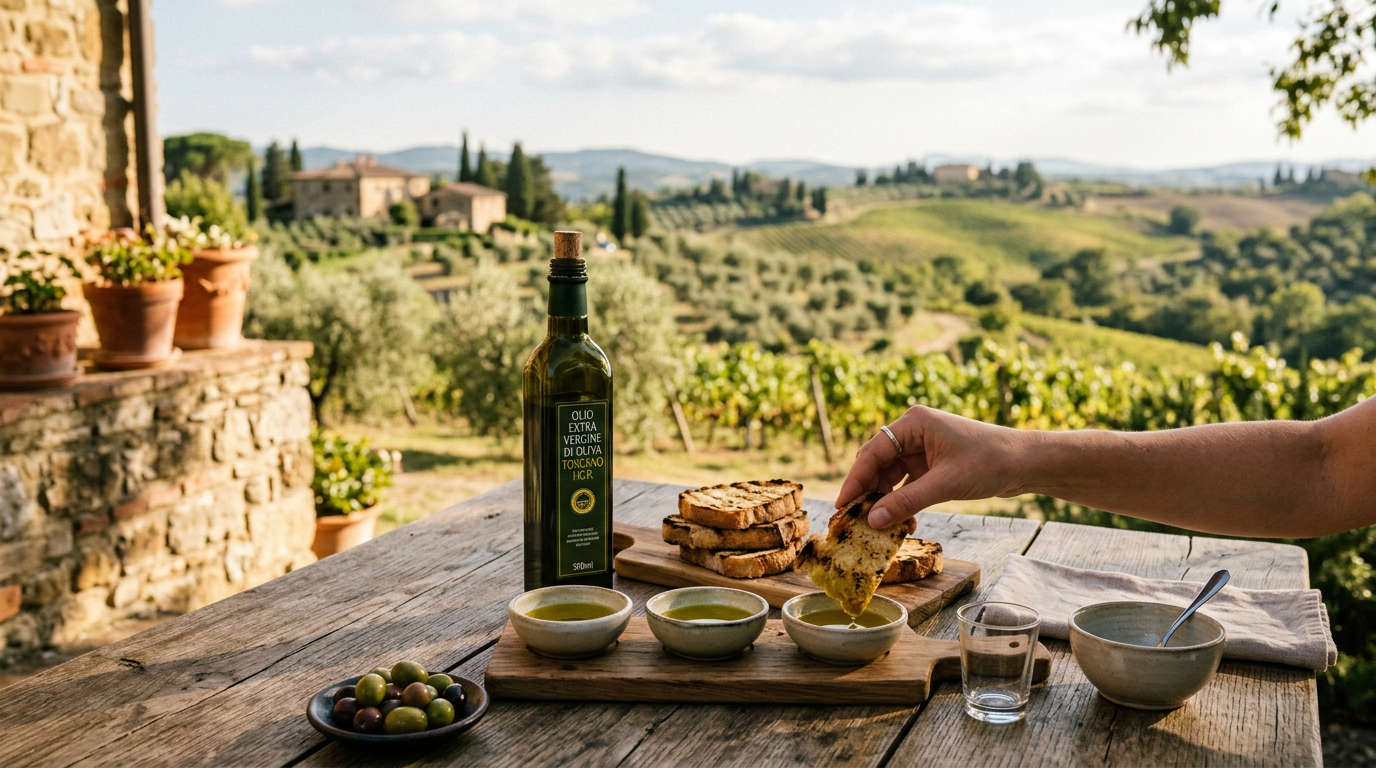
Olive Oil Tasting near Florence: a Practical Guide
Most visitors to Tuscany spend considerable effort thinking about wine and then give olive oil a passing thought in a supermarket on the way to the airport. This is a mistake that a single serious olive oil tasting will correct permanently. Tuscan extra virgin olive oil from the Colli Fiorentini or the Chianti hills is an intensely flavoured, almost aggressive product that bears very little resemblance to the mild, pale oils sold in supermarkets across northern Europe. Tasting it properly - with an explanation of where the flavour comes from and why Tuscan producers cultivate it this way - is one of those experiences that permanently changes how you shop for and use olive oil when you get home. It is also, unusually, an experience that works equally well for adults and children.
What a structured tasting involves
A proper olive oil tasting is a multi-sensory process with a clear technique, and most tastings in Florence and the surrounding hills walk you through it step by step.
The professional tool is a small, opaque blue ceramic cup - the colour is deliberate, chosen to prevent the oil’s visual appearance from biasing your assessment of its quality. You pour a small quantity of oil into the cup, then cup it in both hands and warm it for thirty to sixty seconds. The warmth releases volatile aromatic compounds that cold oil holds back. Then you tilt the cup, insert your nose as fully as seems polite, and breathe in slowly. What you notice at this stage is the fruitiness: does it smell green and grassy, like fresh-cut vegetation, or more ripe and buttery? Green-fruity aromas indicate an early harvest; riper, mellower aromas suggest the olives were picked later.
The tasting step is called strippaggio, which sounds alarming but simply means you sip a small quantity of the oil and then draw in a quick breath of air through slightly parted lips. The turbulence aerates the oil across your entire palate. You are assessing three primary qualities: fruitiness (already noticed on the nose), bitterness at the sides of the tongue (a direct indicator of polyphenol content and freshness), and pungency - the sharp, peppery sensation that builds in the back of the throat five or ten seconds after swallowing. That peppery burn is caused by oleocanthal, a compound with anti-inflammatory properties similar to ibuprofen. A strong Tuscan oil will make you cough slightly. This is not a flaw. It is a sign of quality.
High-grade Colli Fiorentini and Chianti Classico oils tend to have a vivid green colour, a pronounced bitterness, and a finishing pungency that surprises people accustomed to milder oils. The contrast with supermarket-grade olive oil is stark and immediate.
Tastings in the city and just outside it
Within Florence itself, Olio e Convivium on Via di Santo Spirito in the Oltrarno is the most serious dedicated olive oil destination. The shop and restaurant sells a carefully chosen selection of artisan Tuscan and Italian oils and runs occasional structured tastings. The space is calm, unhurried, and entirely unsuited to tourist rush - which makes it ideal for families who want to sit, listen, and taste without being herded. Phone ahead to ask about scheduled tasting dates before visiting.
The Mercato Centrale on Via dell’Ariento hosts producer events throughout the year where Tuscan farmers bring their oils directly to consumers. These are informal, free, and somewhat unpredictable in their scheduling. The market’s online calendar at mercatocentrale.it is the best place to check.
Eight kilometres from Florence in the hills above Fiesole, Fattoria di Maiano produces olive oil, wine, and farmhouse cheeses and accepts visits that include an oil tasting element. The farm is reachable by local bus from Piazza San Marco in central Florence - a 20-minute ride - which makes it genuinely accessible without a hire car. The estate is set in grounds that children can run around in freely, which makes it considerably more relaxing than a city-centre tasting room.
For a more immersive experience, Tenuta di Capezzana is a historic estate twenty kilometres west of Florence near Carmignano. This property has been producing oil and wine continuously since the ninth century and offers structured tours of the olive groves and the frantoio (stone mill press) during harvest season, October to December. Tour prices are in the region of €20–30 per adult. The estate also has a well-regarded restaurant if you want to extend the visit into lunch.
The harvest season and fresh-pressed oil
The olive harvest in Tuscany takes place between late October and early December, depending on the producer’s style and the variety of olive they grow. Visiting during this window transforms the oil tasting experience completely.
Freshly pressed olive oil - called olio nuovo - is available only during and immediately after the harvest. It is cloudy, intensely vivid green, and has a rawness of flavour that disappears as the oil settles and matures over winter. The peppery bite is more pronounced, the bitterness is sharper, and the fruitiness has a freshness that bottled oil, however good, cannot fully replicate. If you have the option to visit Tuscany between late October and late November, organising a farm visit specifically to taste olio nuovo is worth doing.
During the harvest, some farms invite visitors to participate in the picking itself - combing olives from branches by hand into nets spread on the ground below the trees. It is physical work and not especially elegant, but children find it genuinely absorbing and it provides a direct sensory connection to the raw material of the tasting. Villa Campestri Olive Oil Resort in the Mugello valley, 35 kilometres north of Florence, is entirely dedicated to olive oil tourism and runs picking experiences during harvest for approximately €25 per adult.
Why children do well at olive oil tastings
Wine tasting has an age restriction built in. Olive oil does not. Children participate in oil tastings on exactly the same terms as adults, using the same technique, tasting the same oils, and offering assessments that are often more direct and more accurate than those of the adults around them. Young palates are frequently more sensitive to the bitterness and pungency of a good Tuscan oil, and children who are forewarned that “the spicy feeling in your throat means the oil is good” tend to embrace rather than resist it.
The most useful thing to bring to a farm tasting with children is plain, unseasoned bread for clearing the palate between samples. Many farms provide this, but it is worth confirming when you book. Avoid flavoured crackers or anything that will interfere with the flavour perception between samples.
Children between seven and fourteen who complete a serious tasting nearly always leave with a genuine opinion about the oils they tried. Several families we know at Charlotte have bought oil directly from a Tuscan producer during a visit, and the bottles travel home as meaningful souvenirs rather than generic gifts. The team at Charlotte can point you towards the best farms and tastings based on when you are visiting and how much time you have.