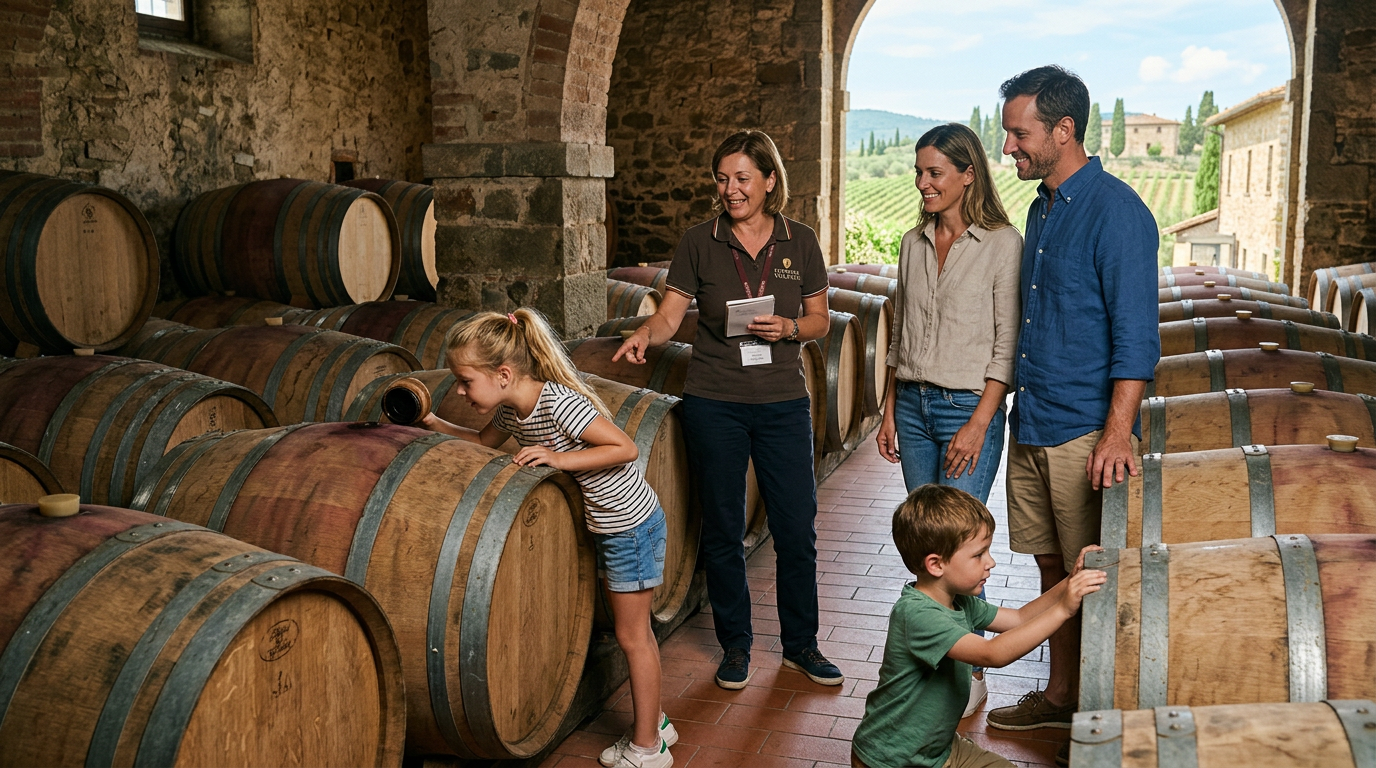
Visiting a Winery near Florence with the Family
A half-day at a Tuscan winery with children is one of those activities that sounds improbable but, at the right estate, works extremely well. The key word is “right.” Some wineries are designed for serious wine culture - quiet tasting rooms, formal presentations, limited tolerance for a six-year-old asking why the barrels smell funny. These are genuinely not the right choice for a family visit. But a farm estate - an agriturismo that makes wine alongside olive oil, honey, and vegetables - gives children space to move, things to investigate, and a sense of place that goes well beyond the cellar. The Chianti, the Colli Fiorentini, and the Rufina zone all have estates within 30 to 60 kilometres of Florence that welcome families properly.
Choosing the right estate: what makes a winery family-friendly
The practical distinction is between an estate that tolerates children and one that has genuinely thought about what children need during a visit. The latter usually shares certain characteristics: outdoor grounds accessible on foot, animals or gardens that create independent interest for younger children, a kitchen or restaurant where families can eat together at the end of the visit, and staff who address children directly rather than around them.
Estates with working farms are the strongest candidates. The presence of olive groves, vegetable gardens, chickens, and sometimes livestock means that children who are not engaged by the barrel room have somewhere else to be and something to see. The visit becomes a whole-farm experience rather than an endurance test of adult patience.
All reputable estates require advance booking - typically three to seven days ahead, and further in advance during September and October when harvest brings peak demand. Book by email or telephone directly with the estate. Most estates near Florence offer English-language visits and are used to international families.
Four estates worth visiting
Fattoria di Maiano, in Fiesole about five kilometres east of Florence, is the most accessible family option and the only one on this list that does not require a car. The estate is reachable on local bus line 7 from central Florence in around 30 minutes. It is a working farm producing Chianti Colli Fiorentini and extra virgin olive oil, with extensive gardens, olive groves, and walking trails on the estate grounds. Children can walk freely while adults taste. Tasting sessions for adults cost approximately 20 to 30 euros per person; entry to the estate grounds is free. The farm restaurant serves lunch on the terrace, and the combination of a morning walk through the grounds, a tasting, and lunch on site constitutes a very complete family half-day without driving an hour into the Chianti.
Castello di Verrazzano, about 30 kilometres south of Florence near Greve in Chianti, is the estate associated with the Verrazzano family - ancestors of the Florentine explorer Giovanni da Verrazzano, after whom New York’s Verrazzano-Narrows Bridge is named. The estate tour follows a guided walk through the vineyards and formal gardens, which are genuinely attractive and easy for children to enjoy at their own pace. The estate also produces honey and olive oil. A tasting visit costs approximately 25 euros per adult; children under 12 pay a nominal 5 euros. Booking is required.
Badia a Coltibuono, near Gaiole in Chianti about 75 kilometres from Florence, is a more substantial half-day or full-day commitment. The estate centres on a medieval abbey with extensive surrounding grounds. It runs a cooking school, maintains a restaurant open for lunch, and has gardens and an abbey church open to visitors. Children who are curious about monastic architecture find the abbey genuinely interesting. Adults can taste and eat well. Lunch at the restaurant runs approximately 40 to 55 euros per adult. The distance from Florence means this works better as a car trip combined with other stops in the Chianti.
Fattoria Viticcio, also near Greve in Chianti, is smaller and more personal in approach. Family visits are arranged individually on request, which means the experience is tailored rather than scripted. A typical visit includes a short walk through the vineyard with an explanation of the growing cycle - accessible and interesting for children when presented well - followed by a cellar visit and a tasting. Contact the estate directly for current pricing.
What children actually do during a winery visit
The vineyard walk is usually where children engage most readily. Seeing grapes growing on a vine - particularly if the visit happens in August or September when the fruit is full and visible - is genuinely interesting for children who have only encountered grapes on supermarket shelves. The winemaker or guide can explain the harvest timing, how the sugar content develops, and what happens when grapes are pressed, in terms that children from about five upward follow without difficulty.
The cellar visit divides families somewhat. Some children are fascinated by the barrels - the scale of them, the smell of fermenting wine, the temperature of the room. Others find it less engaging. Most good guides are experienced enough to read the room and adjust the pace accordingly. If a child’s interest drops, moving them on to the next stage quickly is usually the right call.
September and early October bring the grape harvest, and some estates offer harvest participation experiences - pressing grapes, filling crates, watching the process from crushing to fermentation. This is the most hands-on activity available at a winery, and for children aged five and upward it is absorbing in a way that simply tasting wine is not. If your visit dates fall in this window, specifically ask whether the estate is offering harvest experiences when you book.
During the adult tasting session itself, children at well-organised estates are typically offered grape juice, still water, local bread, and a selection of cheese or salumi. This keeps them present and engaged at the table rather than restless while adults sip and discuss tannins. A tasting session at a good family estate runs approximately 45 to 60 minutes, which is the right length for children.
Planning the logistics: transport, timing, and what not to do
With the exception of Fattoria di Maiano, the estates in this guide require a car. Public transport to rural Chianti does not serve these locations in any practical sense. Car rental from central Florence for a day runs approximately 40 to 60 euros for a mid-size vehicle, booked in advance; prices rise significantly if you book on the day. Driving in the Chianti is straightforward on the main roads and scenic on the smaller ones - though the unpaved strade bianche (white roads) that connect some estates are easier in a standard car than you might expect.
Aim to leave Florence by 09:00 for a morning winery visit. Most estates schedule morning tastings from 10:30 or 11:00, and starting early means you have time to find the estate (GPS coordinates are more reliable than postal addresses in rural Tuscany) and arrive unhurried. Lunch on the estate follows the tasting and typically runs until 14:00 or 15:00. A return drive to Florence in the afternoon has you back by early evening.
Do not plan to visit more than one estate in a day with children. A single good winery experience with time to walk the grounds, see the cellar, taste, and eat is a satisfying and complete day. Trying to add a second estate creates exactly the kind of rushed, over-programmed afternoon that children - and adults - find least enjoyable. One estate, properly visited, is enough.
For a Florence base that makes this kind of day trip easy - close to the car hire offices in the city centre and to the Chianti road south - Charlotte is at Via Guido Monaco 19, five minutes from Santa Maria Novella station, and a comfortable place to plan a morning departure into the Tuscan countryside.